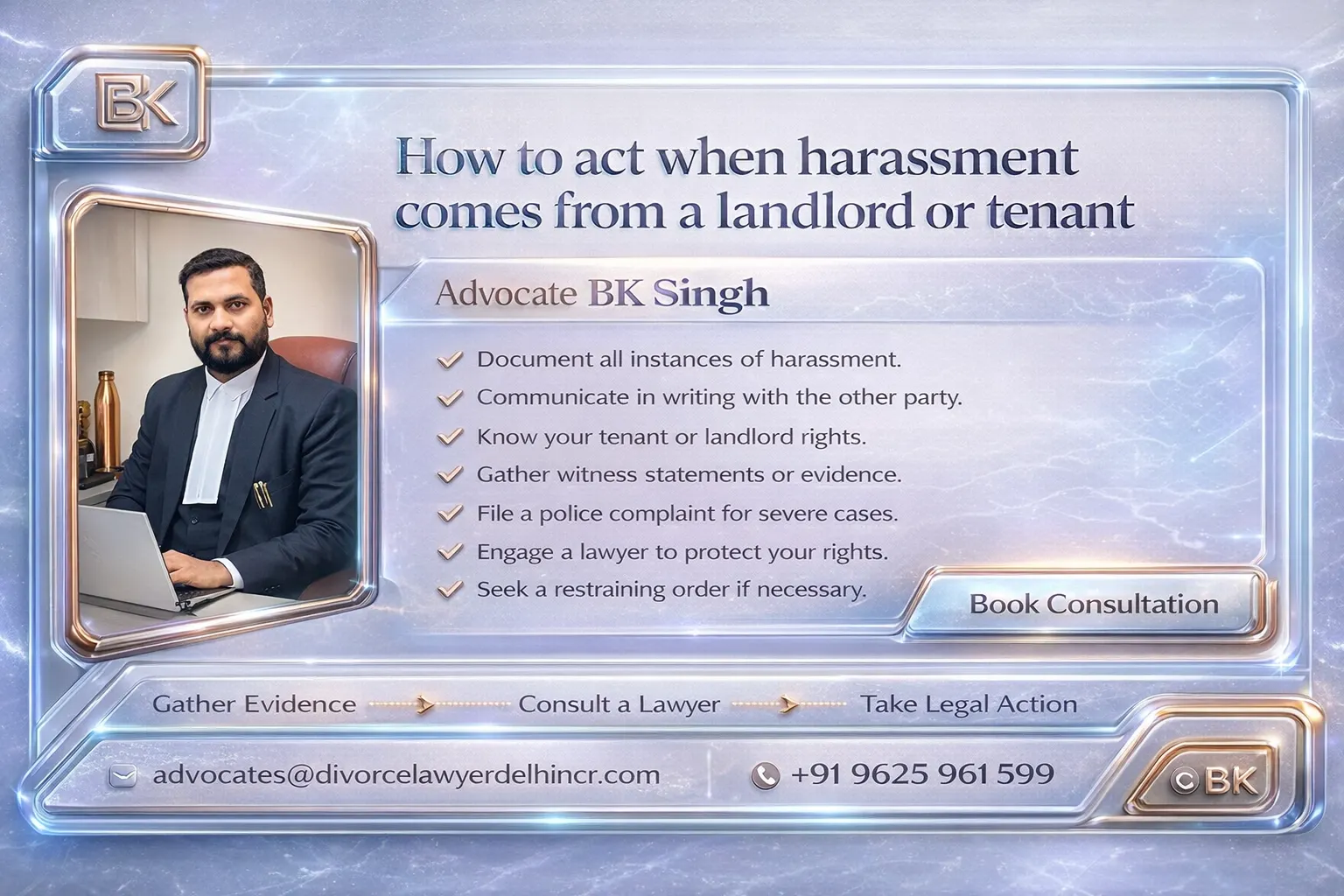
How to act when harassment comes from a landlord or tenant
People often feel stuck between fear, anger, and confusion when a rental relationship goes bad. Landlord and tenant harassment in India can include threats, repeated abuse, pressure to leave without notice, illegal entry into the property, refusal to return a deposit, cutting off utilities, not paying with threats, false complaints, or constant disturbance meant to make the other person give up. The law does not see every disagreement as just a rent problem. Depending on the facts, the case could involve civil remedies, police involvement, criminal intimidation, trespassing, breach of peace, or emergency protective orders from a Magistrate. In Delhi and many other cities, eviction and possession disputes still have to go through the legal system. Tenants in protected categories can't just be thrown out by force.
The first rule that makes sense is easy. Don't respond with violence, abuse, or revenge. Start collecting proof right away. If it's legal, keep recordings of phone calls, WhatsApp chats, rent receipts, bank transfers, electricity bills, footage from the gate camera, statements from neighbors, pictures of the damage, and a written timeline of every event. The Protection of Women from Domestic Violence Act can also help women who are being abused in a shared home because it recognizes domestic violence in a broad way and offers legal protection, including housing-related relief. This is where Divorce Lawyer Delhi NCR and Advocate BK Singh can really help, especially for middle-class families and small business tenants who can't afford to make a mistake.
1. What harassment by a landlord or tenant usually looks like
Harassment in rental situations doesn't always start off with a bang. It can start with calls at strange hours, pressure to raise rent without agreement, threats to lock the property, insults in front of neighbors, or purposely delaying basic repairs to make the other person uncomfortable. In business leases, harassment can include bothering customers, blocking doors, threatening employees, breaking in, or taking things without permission. People often think of these as personal fights, but the pattern is what matters. The law sees things very differently when someone does something over and over again to scare someone or make them give up.
A tenant can also bother a landlord. Some common examples are refusing to pay on purpose while making threats, using property inappropriately, bothering neighbors, refusing to let an inspection happen when it is legally required, damaging property, sending abusive messages, or making false accusations to get what you want. Many owners lose control because they get angry and don't keep a written record of their cash transactions. A lot of tenants lose their protection because they stop writing down harassment and only talk about it. Many clients go to Divorce Lawyer Delhi NCR and Advocate BK Singh before things get out of hand and become a police or court issue because a calm legal strategy works better than getting angry.
2. What to do in the first 24 hours
The first twenty-four hours are important because the first evidence is usually the strongest. Make a note of the exact date, time, place, words spoken, and names of everyone who was there. If locks were changed, things were moved, notices were put up, or entry was forced, take pictures. If the harassment happened over the phone or in messages, export the chat, take screenshots, and keep the original device safe. Don't delete anything, even if the other person says they're sorry later. If you are in immediate danger, call the police and tell them clearly that you are afraid of breach of peace, intimidation, trespass, or illegal dispossession. Threats meant to scare someone or make them do something they don't have to do are considered criminal intimidation under the Bharatiya Nyaya Sanhita.
The second step is to stop talking about it informally once it turns into threats or coercion. To keep the record clean, talk through messages, email, or a notice written by a lawyer. Don't give someone your keys under pressure, don't accept verbal promises about getting your deposit back, and don't sign papers that are dated back. In a lot of cases, one strong legal notice changes the tone because it shows the other side that the issue is now on record and ready for official action. This is often where Advocate BK Singh helps the most: by turning panic into a structured response for families, working women, seniors, and small business owners.
3. when the issue is civil and when it turns into a crime
Not every rent dispute is a crime, and not every crime is a civil matter. Not paying rent, disagreeing over the notice period, and regular deposit disputes usually start out as civil cases. But if one side uses threats, abuse, force, illegal entry, unlawful confinement, or deliberate disturbance to scare the other side, they may also face criminal charges. The Bharatiya Nyaya Sanhita lists crimes like criminal intimidation and intentional insult meant to cause a breach of peace. More serious behavior can also be considered trespass or assault, depending on the facts.
This difference is important because a lot of victims hear the same thing at the police station: "This is a civil matter; go to court." That sentence is only partly right. A civil issue about recovering property or rent may exist, but threatening calls, entry at midnight, changing locks, or abusive intimidation can still make it necessary for the police to get involved. A good lawyer makes sure that the rent dispute and the harassment part are separate and presents both cases clearly. Divorce Lawyer Delhi NCR and Advocate BK Singh often help clients figure out how to present the facts so that the real issue doesn't get lost in a general property dispute.
4. Legal options for tenants who are being harassed
A tenant who is being harassed by their landlord may be able to get help through a legal notice, a police report, a civil injunction, a complaint to the Rent Controller or a competent court, depending on the city and rent law. In urgent cases, they may also be able to get preventive orders if they think the landlord will break the peace. The Delhi Rent Control Act still protects some tenants in Delhi from being evicted except for legal reasons and through the proper channels. That means a landlord can't just use violence, threats, or self-help to get rid of a tenant who is protected by the law.
When the behavior becomes threatening or dangerous, the Bharatiya Nagarik Suraksha Sanhita's preventive powers may also apply. This is because the law allows for executive action in cases of urgent nuisance or perceived danger, and it handles disputes over immovable property separately. In simple terms, the law does give people quick ways to get around a slow final trial if the situation is likely to lead to illegal dispossession or public disturbance. A well-prepared filing with documents, pictures, and a history of messages often makes it more likely that you will get quick interim relief.
5. Legal options for landlords who are being harassed by tenants
When a tenant becomes violent or aggressive, landlords do have options. The owner can go through the legal process of eviction or possession if a tenant stops paying rent, damages the property, causes problems, threatens the owner, or refuses to follow the terms of the lease. The owner can also file a police report for intimidation or violence and claim for back rent or damage. In Delhi, the law sets out specific reasons for eviction, so landlords can't just use force or lockout methods. They have to follow the right steps.
A landlord should also stop doing business with cash once harassment starts. Only accept rent through a traceable method, send written communication, and only check the property when it is legal to do so. Don't cut off power, take down doors, threaten family members, or send muscle men, because that weakens the owner's case and could get you in trouble with the law. One rash act can hurt a lot of strong cases. Advocate BK Singh usually starts with document discipline, lawful notice, and controlled communication to make sure that the owner is still the credible party in front of the police, court, or other authority.
6. Extra protection for a woman who is being harassed at home
If the fight is between a woman who lives in a shared house, it could be about more than just tenancy language. The Protection of Women from Domestic Violence Act protects women from all kinds of abuse in a domestic relationship, including physical, verbal, emotional, economic, and other types of abuse. It also acknowledges a woman's right to live in a shared home and allows for residence orders, protection orders, and even directions for alternate housing or rent when appropriate. This is very important when harassment is disguised as a property or home dispute after a marriage ends or a family fight.
This is one reason why Divorce Lawyer Delhi NCR is a good name for this subject. A lot of women don't know if they're dealing with a rental dispute, domestic abuse, or both at the same time. It depends on who is bothering them, what kind of relationship they have with that person, and where they live. Advocate BK Singh helps clients get their complaints to the right place with the right facts by helping them separate their emotional stress from the legal system. This way, the complaint doesn't get weaker right away because of confusion.
7. Common errors that make the case less strong
The biggest mistake is only talking to each other. People keep saying that everyone in the building knows what happened, but courts and police work better with evidence than with rumors. The second mistake is paying cash without getting a receipt and then claiming that the rent was paid. The third mistake is sending angry, rude replies, which gives the other side a chance to tell a different story. The fourth mistake is waiting too long after a serious threat. This is because waiting can make people doubt unless there is a clear explanation. These mistakes in practice hurt both landlords and tenants more than they know.
Another common mistake is picking the wrong fix first. Some people only file a police report when they really need an injunction. Some people rush into a civil case but ignore real threats that need police protection right away. Some women only talk about property issues and leave out the verbal and emotional abuse that the domestic violence law recognizes. A good lawyer looks at the whole picture. That way of planning cases is one reason why a lot of clients trust Advocate BK Singh to give them clear next steps instead of vague advice and false confidence.
8. How a lawyer can help you before the problem gets worse
You don't get good legal help in court. It starts with looking at the tenancy papers, rent history, deposit terms, possession status, message trail, police risk, and how quickly protection is needed. After the facts are straightened out, the next step could be a strongly worded notice, a draft of a police complaint, a preventive representation to the local government, a civil injunction, a domestic violence application, or an eviction or recovery proceeding. The right first move usually lowers the damage and raises the chances of a settlement because it shows that you mean business without making things worse.
For middle-class families, single women, seniors, and small business clients, the cost and speed of legal services are just as important as the theory behind them. Divorce Lawyer Delhi NCR and Advocate BK Singh focus on paperwork that is useful, timelines that are realistic, and actions that protect the client's home, dignity, or source of income. People who are being harassed by their landlord or tenant need more than just the law. They need clear guidance, strong paperwork, and someone who knows how quickly these disagreements can become personal. That's why getting good advice quickly is often more important than going to court late.
Reviews from Clients
*****
Ritika Malhotra
I was being forced to leave the flat without enough notice, and the calls were making me feel bad. Advocate BK Singh told me what was legal and what wasn't, helped me keep evidence, and sent a notice that changed the other side's tone right away. For the first time in weeks, I felt safe.
*****
Naveen Suri
My tenant stopped paying rent and started threatening me when I asked for a timeline. I didn't want to get into a fight that was against the law. BK Singh Advocate helped me stay on the right side of the law, kept track of everything I did, and helped me take strong action without going too far.
*****
Shazia Rahman
What seemed like a simple housing problem was really harassment that was starting to bother my peace and safety. I liked how patient they were, how clearly they explained things, and how they never made me feel like I had to act quickly. The advice was useful and based on real life.
*****
Deepak Bansal
My small store was hurt every day by the fight I was having with my landlord. Advocate BK Singh helped me figure out the difference between a rent dispute and illegal pressure tactics. That made it easier for me to do the right thing at the right time.
*****
Minal Arora
I wasn't sure if I should call the police, send a notice, or go to court. BK Singh Advocate made everything clear and easy to understand, which made the process easier. The help was always serious, quick, and honest.
?FAQs
Q1. Can a landlord in India make a tenant leave without going to court?
No. Generally, eviction must follow the laws that apply to the property and the city. A landlord cannot just kick a tenant out of a protected situation, like when rent control laws are in place.
Q2. What should a tenant do if their landlord threatens or hurts them?
The tenant should keep all evidence, not fight verbally, write letters, and call the police or a lawyer if they feel threatened, are illegally entered, or are threatened with eviction. The Bharatiya Nyaya Sanhita says that criminal intimidation is a crime.
Q3. Can a landlord cut off the water or electricity to get a tenant to pay?
Using basic services as a way to put pressure on the landlord can hurt their case a lot and may even lead to immediate legal action, depending on the facts. The safest way is always to give lawful notice and go through formal proceedings, not to use pressure.
Q4. Can a tenant file a police report against their landlord for harassment?
Yes, when the facts include threats, force, trespassing, assault, or behavior that is likely to cause a breach of peace. The fight over rent may be civil, but the harassment part could still be a reason for police to get involved.
Q5. What should a landlord do if a tenant is bothering them?
If there are threats or violence, a landlord can file an eviction or possession lawsuit, write a legal notice, document missed payments and bad behavior, and go to the police. It's important to follow the law and keep your record clean.
Q6. Is WhatsApp chat a valid proof in cases of rental harassment?
It can be very helpful to have chats, emails, call logs, payment records, photos, and videos to prove behavior and a timeline. It is important to keep original records safe because they are often very important to a case.
Q7. Can a woman assert residence rights when the conflict involves familial harassment?
Yes, if the facts are right. The Protection of Women from Domestic Violence Act protects a woman's right to live in a shared home and includes orders about where she can live.
Q8. Should I send a legal notice before I file a case?
Yes, in a lot of cases of landlord and tenant harassment. A good notice makes a written record, says what the law was broken, and often stops things from getting worse. It also helps show that you were reasonable before moving on.
Q9. Can I get help right away if I am afraid of losing my home or being hurt?
Yes, depending on the situation, you may be able to get urgent civil relief or start preventive proceedings. The Bharatiya Nagarik Suraksha Sanhita has rules for dealing with urgent cases of nuisance or perceived danger and for disagreements over real estate.
Q10. Why should I get in touch with Advocate BK Singh right away if I'm having trouble with my landlord or tenant?
Early legal advice helps you choose the right solution, keep the right evidence, and avoid making emotional mistakes that hurt your case. In these cases, the first few steps often determine how strong your position will be later.
Don't worry; Divorce Lawyer Delhi NCR explains everything in plain language without using legal jargon.
No stress and no confusing legal language, Divorce Lawyer Delhi NCR gives clear, honest guidance based on real case experience so the divorce process stays simple and easy to understand.
Schedule Your Consultation