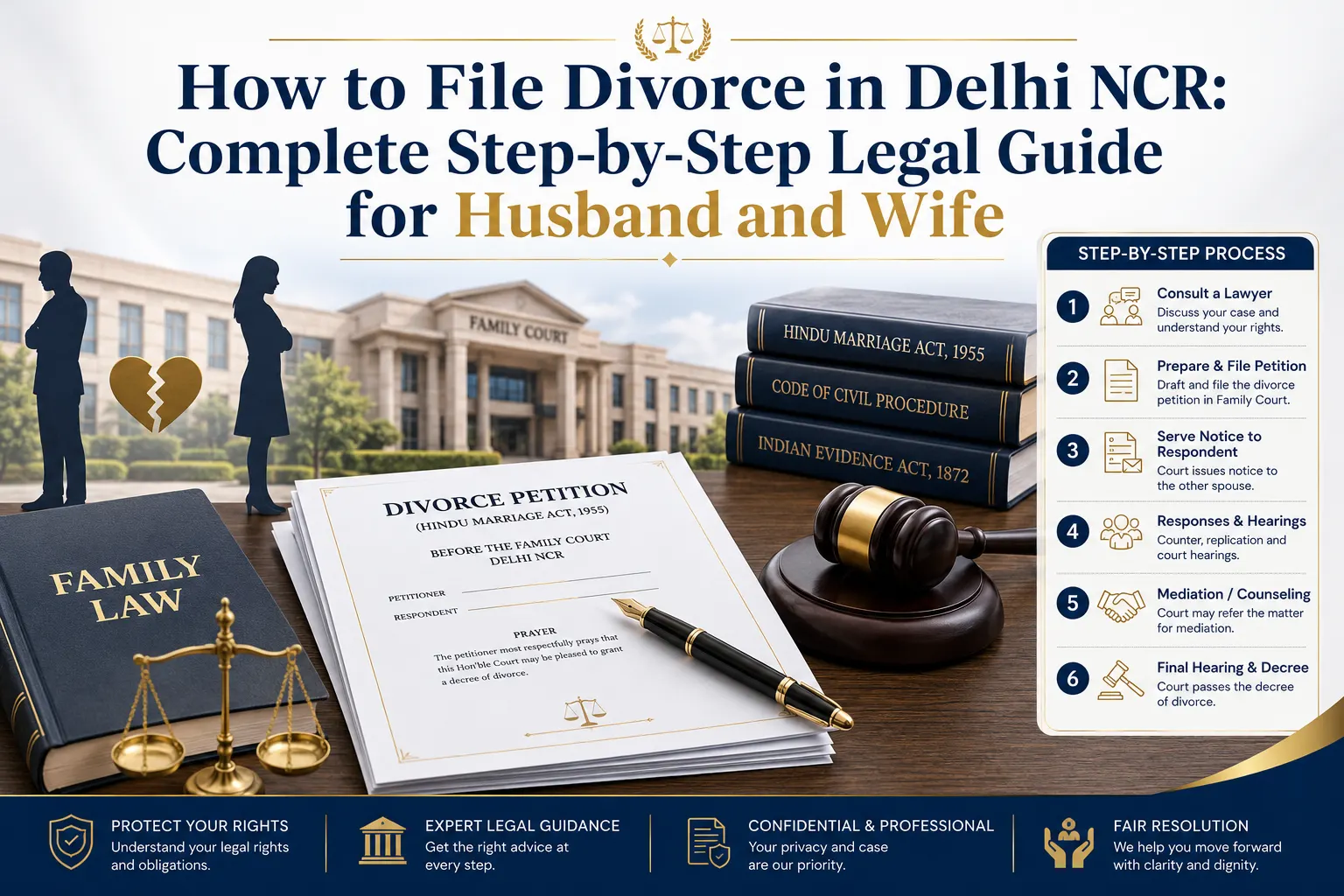
Disclaimer: This article is for general information purposes only. It may not apply to your specific facts or situation. Do not rely on this article as legal advice for any particular issue. You should consult a lawyer for advice regarding your specific situation. Divorce does not begin or end in court. It is a personal decision. It is a legal process. And it can be an emotional turning point in the lives of husband and wife. Often, people look for how to file divorce in Delhi NCR only when the marriage is irretrievably broken and beyond repair. This could be after months of quarrels, hesitation or family pressures. Sometimes it is after failed mediation or settlement talks. Often it is after repeated fights. HERE'S A NEWSFLASH: while the legal procedure for divorce depends on facts, there are certain fixed steps you must follow. The divorce procedure in Delhi NCR starts with one question: Do you and your spouse both want divorce? Or does only one spouse want divorce? Based on your answer, divorce may either be filed as mutual consent or contested divorce. If both spouses want divorce, it may be mutual consent divorce. When one spouse does not want divorce or when couples fight over cruelty, desertion, adultery, money, maintenance, custody, dowry allegations, domestic violence or property, the divorce suit may become contested. Most people file divorce in anger without knowing the legal roadmap, proper documentation or the evidence required. They do not understand future consequences because they want the divorce NOW. As a result, their divorce petition is drafted hastily without bothering about facts, dates and lawful relief. Some people think divorce petition is just a form to fill. They forget that it can come back to haunt them later if it's not drafted carefully. I have helped clients protect themselves when filing divorce. To understand legal routes for divorce, maintenance case, child custody or drafting a divorce notice in Delhi NCR, you can visit divorcelawyerdelhincr. Take a deep breath. Divorce may be inevitable, but that doesn't mean you should rush into filing the divorce petition. Before you jump into divorce filing in Delhi NCR, ask yourself this practical question: What exactly do I want from court? Some people just want legal separation from their spouse. Some want divorce decrees which they can use to get remarried. Some want custody of children. Some want to protect themselves from false dowry or domestic violence allegations. Some want maintenance. Some want money by way of settlement. Some simply want an end to their marriage without the public hassle. Your legal route depends on what you want to achieve. Divorce filing can take many routes depending on personal laws applicable to you. For Hindu marriages including Sikh, Jain and Buddhist marriages, divorce is typically filed under the Hindu Marriage Act, 1955. For Christian, Muslim or interfaith divorces, there are separate laws. For interfaith couples married under Special Marriage Act, divorce can be filed under that Act. Divorce cases are filed in the family courts having jurisdiction over where the husband and wife live, work or last lived together. In Delhi NCR, family courts from Delhi, Gurugram, Faridabad, Ghaziabad, Noida or outer districts may come into play depending on facts. So the lawyer and family court you approach for divorce should have jurisdiction over your city or town. Family matters in Delhi are typically filed in courts like Tis Hazari, Saket, Rohini, Dwarka, Karkardooma or Patiala House courts depending on where the husband and wife live. If your family matter falls in any of these areas, a divorce lawyer in Delhi can help identify the right court before filing. But there's something important that most guides don't tell you: Filing divorce not only dissolves your marriage. It decides your money, residence, children, reputation, false criminal cases, domestic violence claims if any, maintenance rights, stridhan, settlement terms and even your future freedom to remarry. A divorce filed in haste can cause more problems than it solves. Make sure you know what you're doing. Both husband and wife have decided they do not want to be married anymore? And both want an amicable divorce without fighting over money or custody? Congratulations. You have hit the jackpot. You qualify for mutual consent divorce. What's that, you may ask. Well, mutual consent divorce is when both husband and wife jointly agree that they do not want to live together or be married anymore. You both also agree on important terms like permanent alimony or maintenance, child custody, visitation rights, estranged asset claims like jewelry, household items, false pending complaints if any or any other money-related issues. For Hindu couples, mutual consent divorce is filed under Section 13B of Hindu Marriage Act. The process requires two motions. In first motion, both parties jointly file a divorce petition in family court. This petition usually states that they have lived separately for the statutory period, have failed to live together and both spouses have agreed to dissolve the marriage. The family court hears both parties and records the settlement terms. After first motion, the court directs the parties to wait for a period of time before filing second motion. This period is generally cooling-off period but may be waived in certain facts as per law. That's why it is important to get your paperwork and settlement drafted properly. A vague agreement will come back to bite you later. After cooling-off period expires, parties appear again for second motion. Both parties inform the court that they still desire divorce under mutual consent. If court is satisfied, it may grant a decree of divorce. Mutual consent divorce requires a settlement agreement. This agreement should be thorough. Leave nothing open-ended. For instance, if wife is receiving permanent alimony or settlement amount, specify the amount, mode of payment, timeline of payment and what happens if payment is not made. If children are involved and wife is going to keep the child, specify custody and visitation rights clearly. If there's any pending complaint or case, specify how and when it will be withdrawn. Practical example: One of my clients had divorced her live-in boyfriend. They were residing in South Delhi and had been separated for nearly 2 years. The couple had no child. However, there were disputes about jewellery and some pending maintenance. Instead of filing multiple contentious cases against each other, they settled the amount. She prepared a thorough mutual consent divorce petition and filed the first motion successfully. Because they clearly recorded all terms, the second motion was easier and faster. Planning is key. If you are looking for mutual consent divorce services in Delhi NCR you can visit this page. Both spouses do NOT want divorce? Wait... What about husband wants divorce but wife doesn't? Ah! Now we're talking. Contested divorce in Delhi begins when one spouse files for divorce against the other spouse on lawful grounds. Simply saying "I am not happy" won't do. You need to prove lawful reasons for divorce like cruelty, desertion, adultery, conversion, mental illness, disease, renunciation, presumption of death or any other ground recognized by law. In Delhi NCR contested divorce is often accompanied by related proceedings. Wife may file maintenance, dowry allegations, domestic violence or stridhan claims. Husband may file divorce on grounds like cruelty, desertion or false dowry allegations. Sometimes, both husband and wife end up filing multiple cases against each other. The real strategy begins in handling all these matters together. The procedure for filing divorce in Delhi is fairly simple: Divorce petition is drafted and filed before family court. This petition includes details like marriage information, date/place of marriage, facts about living together, children if any, date of separation, facts proving legal grounds for divorce, previous litigation between parties if any and reliefs sought for. Once petition is filed, family court issues notice or summons to other spouse. The respondent spouse files a written statement. Petitioner may file replication. Then issues are framed. Evidence is presented. Witnesses are examined. Evidence gets over. Finally, both parties argue and court passes orders. Sounds simple? Imagine the same procedure where both parties deny each others claims, avoid reaching a settlement and file multiple applications every step of the way. Now it becomes contested. Documentation and evidence plays an important role in contested divorce. Say husband files divorce on ground of mental cruelty. He will have to prove mental cruelty by producing evidence like messages, emails, call data records if legally obtained, witnesses who know about cruelty and pleadings that match his evidence. Likewise if wife files divorce for harassment, financial neglect and mental cruelty, she will have to bring evidence of marriage, residence, income proofs, gifts, messages, false complaints received, medical records and any other evidence to support her claims. Patience and a clean history help you win contested divorce. Don't send angry messages. Don't threaten. Don't fake your income. Don't doctor evidence. Family judges have seen these angles many times before. To understand litigation strategy for contested divorce in Delhi NCR, you can visit this page. Want divorce but don't know what paperwork you should start collecting? Documents play an important role in divorce cases. While most people only care about the divorce petition, your attention should be on documents and evidence. Documents required for mutual consent divorce typically include marriage photographs, marriage certificate if available, wedding cards, address proof of both parties, identity proofs of both parties, recent passport size photographs, proof of separation, details of agreement on settlement, alimony or maintenance if any and child custody if children are involved. Documents required for contested divorce depend on facts and grounds. In cases of cruelty, useful evidence includes but is not limited to messages, emails, call records if legally recorded, medical reports, police complaints, counseling records, proof from witnesses, photographs, social media screenshots, travel documents, bank statements and previous litigation copies. For maintenance and alimony to husband or wife, documents showing income of parties become important. This includes salary slips, bank accounts, income tax returns, business accounts, property papers, lifestyle of spouse, loan obligations, school fees, medical expenses and rent agreements if any. Documents required for child custody focus on welfare of child. Here the court looks at children's school records, medical records, daily care routine who has been taking care of child from day one, where children stay majority of time, school fees, medical expenses, photographs of children with both parents and conduct of both husband and wife. Remember court will not treat child as wife's prize or husband's property. They consider what's best for child. Child custody and visitation rights are often misunderstood. If your case involves custody, read this article. Note: keep DOCUMENTS in chronological order. It will help your lawyer analyze facts and file proper pleadings. Courts appreciate organized documents. Lawyers work quicker when your file is arranged. A sloppy file delays cases because everyone struggles to find things in clutter. Divorce takes how long? How much will divorce cost in Delhi NCR? If you've been wondering about timing and costs, here are some basic ideas. Timeframe for divorce depends on type of divorce. A mutual consent divorce is quicker than contested divorce because parties have already settled their issues. If all terms are clearly settled, all documents are in place and both parties are proactive about appearing in court on time, divorce process can be quick. However, multiple factors are involved like court timelines, clarity of settlement and cooling-off period waiver. As far as contested divorce is concerned, it takes longer because court has to allow both sides to argue, record evidence and decide disputed facts. Further, if there are multiple connected proceedings like maintenance, child custody proceedings, domestic violence, criminal cases and property disputes, overall timeline increases. Divorce fees in Delhi NCR vary from lawyer to lawyer. Costs involve drafting, court appearances, complexity of matter, urgency, number of connected proceedings and experience of lawyer. A simple mutual consent divorce with terms settled amicably is much cheaper than contested divorce with evidence, interim maintenance, child custody and multiple applications pending. Maintenance and alimony: Under Hindu Marriage Act, either spouse can claim interim maintenance while case is pending and permanent alimony at the time of granting final relief or settlement. Court considers income, lifestyle, needs, liabilities, dependents, earning capacity and parties conduct in matrimonial cases to decide such matters. Wife can claim maintenance if she doesn't have sufficient independent income to support her. Husband can defend such exaggerated claims if he has genuine financial hardships or if wife is employed. In certain cases, even husband can claim relief if facts and law are favourable to him though such cases are very rare and need to be assessed independently. For divorce cases involving claims for financial relief, visit maintenance and alimony lawyer in Delhi page. Child custody: Wife is not automatically entitled to child just because she is mother. Likewise, husband is not denied custody only because he is father. Courts focus on welfare of child when deciding custody and visitation petitions. Parents tend to fight over pride more than parenting these days. In fact, I have seen cases where a reasonable visitation agreement helped parents cool down faster than long divorces speeches. Your child should not become a carrier of messages between hostile husband and wife. Not only will courts frown upon it, your child deserves better. If you are looking for step by step divorce procedure in Delhi NCR, here is a simple guide for divorce. Share complete facts calmly without hiding previous complaints if any, messages, settlements or financial information. Give proper facts and details. Your lawyer can help you better if he knows the facts. If both parties agree to divorce, mutual consent is the way to go. If wife does not agree or husband wants divorce against wife's wishes, contested divorce is necessary. If there's domestic violence, threat, maintenance pending, child custody or false criminal case, plan those remedies simultaneously. This includes marriage proof, residential proofs, identity proofs, income details, evidence such as messages, emails, CDs if legally obtained, children's schooling and medical records and previous litigation copies. Petition should mention place of jurisdiction, marriage details, living-together facts, children details, date of separation, grounds and reliefs demanded. For mutual consent, settlement must be detailed. For contested divorce, make sure facts prove grounds. File the divorce petition before family court having jurisdiction over place where marriage happened, husband and wife last lived together or wife currently lives. Court checks paperwork and fixes first hearing date. In case of mutual consent divorce, both spouses appear in court and give their statements. In contested cases, notice is served to other spouse and pleadings begin. After pleadings, interim applications if any are heard. Then evidence. Even if it's contested divorce, chances are your divorce may settle during mediation. Delhi courts usually refer couples for mediation in family disputes. An amicable settlement is always better than prolonged litigation. Court examines both sides and proceeds to decide the case. Above is the basic divorce filing process family courts in Delhi follow. You can also find contact details of lawyers practicing in specific courts like divorce lawyer in Dwarka Court, divorce lawyer in Rohini Court or divorce lawyer in Tis Hazari Court in Delhi. Divorce cases need strategy more than drafting. At divorcelawyerdelhincr, we aim to provide you simple and practical legal guidance when dealing with divorce cases, maintenance petition, matrimonial matters husband or wife, child custody disputes and related laws in Delhi NCR. Our goal is not to fight your divorce case antagonistically. Our clients include happy husbands and wives who divorced without burning their bridges. We aim to protect your rights, minimize confusion and take your case in the right direction. Advocate BK Singh helps clients with divorce notice, mutual consent divorce, contested divorce cases, divorce settlement agreement, maintenance and alimony claims, custody and visitation rights of children and family court representation. Divorce lawyer in Delhi NCR should guide you about strengths and weaknesses of your case before starting. You should know about documents needed, estimated timeline, risks involved and feasible options for settlement. No lawyer can guarantee results because family courts depend on evidence, party's conduct, court's discretion and facts. I believe clients should have a clear idea about what to expect. Divorce is hard on you. Don't stress about legal procedure too. Find out if you qualify for mutual consent divorce or need to file contested divorce against your spouse. Collect documents and evidence. Draft divorce petition and file it before family court having jurisdiction to hear your divorce case. Divorce process for mutual consent divorce is different from contested divorce procedure in Delhi. Mutual consent involves joining petitions, first motion, confirmation of settlement and second motion. Contested divorce includes filing petition, notice to respondent, reply by respondent, evidence and arguments. Yes. A husband can file divorce in Delhi against his wife if facts allow him to do so. He needs to have legal grounds to divorce wife. Grounds differ depending on personal laws applied to husband and wife. Yes. Wife can file divorce petitions in Delhi against her husband if she has legal grounds and the court has jurisdiction. In certain cases, law also provides convenience to wife regarding place of filing divorce. Documents required include proof of marriage, address proof, identity proof, photographs of marriage, income details, evidence against spouse if any and previous court cases copies related to marriage. It depends on court timelines but mutual consent divorce moves faster than contested divorce because parties have settled their issues. Also both parties have to appear in court for statements twice. If terms are clearly recorded and drafting is properly done, mutual consent divorces take less time than contested divorces. Contested divorce cases can take time because court has to allow parties to file their pleadings, record evidence and listen to both sides. Additionally if there are multiple proceedings like maintenance pending, custody disputes, criminal cases or related property disputes overall divorce timeline is increased. Cost differs from lawyer to lawyer based on complexity of matter, drafting work, number of hearings, urgency, connected proceedings and experience. Simple mutual consent divorce with terms settled amicably is cheaper than contested divorce where evidence, interim maintenance, child custody and multiple applications are filed. Yes. During divorce proceedings or separate applications can be filed for child custody and visitation rights. But remember, court does not decide custody based on whether husband or wife is father/mother. No. but courts usually refer you for mediation if both parties are open to settle their disputes. Having a practical and clear settlement can save you years of litigation stress. If you fail to settle during mediation, case proceeds as per law. Start with a free case evaluation. We can help you divorce, defend or settle your family law case. Call Us On: 9654961599 We will call you back.How to File Divorce in Delhi NCR: Complete Step-by-Step Legal Guide for Husband and Wife
What Should You Know Before Filing Divorce in Delhi NCR?
Mutual Consent Divorce Process in Delhi NCR
Contested Divorce Process for Husband and Wife
Documents Required for Divorce in Delhi
Divorce Evidence Checklist
Cost, Timeline, Child Custody, Alimony and Maintenance
Step by Step Divorce Filing Process in Delhi NCR
How Advocate BK Singh and divorcelawyerdelhincr Can Help
FAQs on How to File Divorce in Delhi NCR
1. How to file divorce in Delhi NCR?
2. What is the divorce process in Delhi NCR?
3. Can a husband file divorce in Delhi?
4. Can a wife file divorce in Delhi?
5. What documents are required for divorce in Delhi?
6. How long does mutual consent divorce take in Delhi NCR?
7. How long does contested divorce take in Delhi NCR?
8. What is the cost of divorce in Delhi NCR?
9. Can child custody be decided during divorce?
10. Is mediation compulsory in divorce cases?
Want Divorce Papers?
Don't worry; Divorce Lawyer Delhi NCR explains everything in plain language without using legal jargon.
No stress and no confusing legal language, Divorce Lawyer Delhi NCR gives clear, honest guidance based on real case experience so the divorce process stays simple and easy to understand.
Schedule Your Consultation